Hail hit your roof. Here's what happens next.
Colorado's Front Range is one of the most hail-prone places in North America. We've guided hundreds of homeowners through claims since 2010 — documentation, adjuster meetings, and a roof built better than the one the storm took.
Will insurance cover your hail-damaged roof in Colorado?
Most Colorado homeowner policies cover hail damage, minus your deductible, and you generally have one year from the storm date to file. If the adjuster confirms sufficient damage, insurance pays for the replacement or repair. Your out-of-pocket cost is your deductible — nothing more, and legally nothing less.
That last part matters. Colorado law (SB 12-038) makes it illegal for a roofing contractor to waive or absorb your deductible. The "free roof, we'll eat your deductible" pitch that shows up on door hangers after every storm is against the law — and a contractor willing to break that law is telling you something about how they'll handle your roof.
How do you know if your roof actually has hail damage?
From the ground, look for these after a storm:
- Dented gutters, downspouts, or metal window wraps
- Granules piling up at downspout exits — hail knocks the protective surface off shingles
- Bruised, bald, or shiny spots visible on shingle faces
- Damaged AC fins, deck rails, or window screens (adjusters check these too)
- Neighbors getting roofs replaced — hail swaths hit streets, not single houses
Real confirmation requires getting on the roof. Hail bruises — crushed granules over fractured fiberglass mat — are often invisible from below but shorten the roof's life by years. That's the reason we inspect for free after storms, even when nothing looks wrong from the driveway.
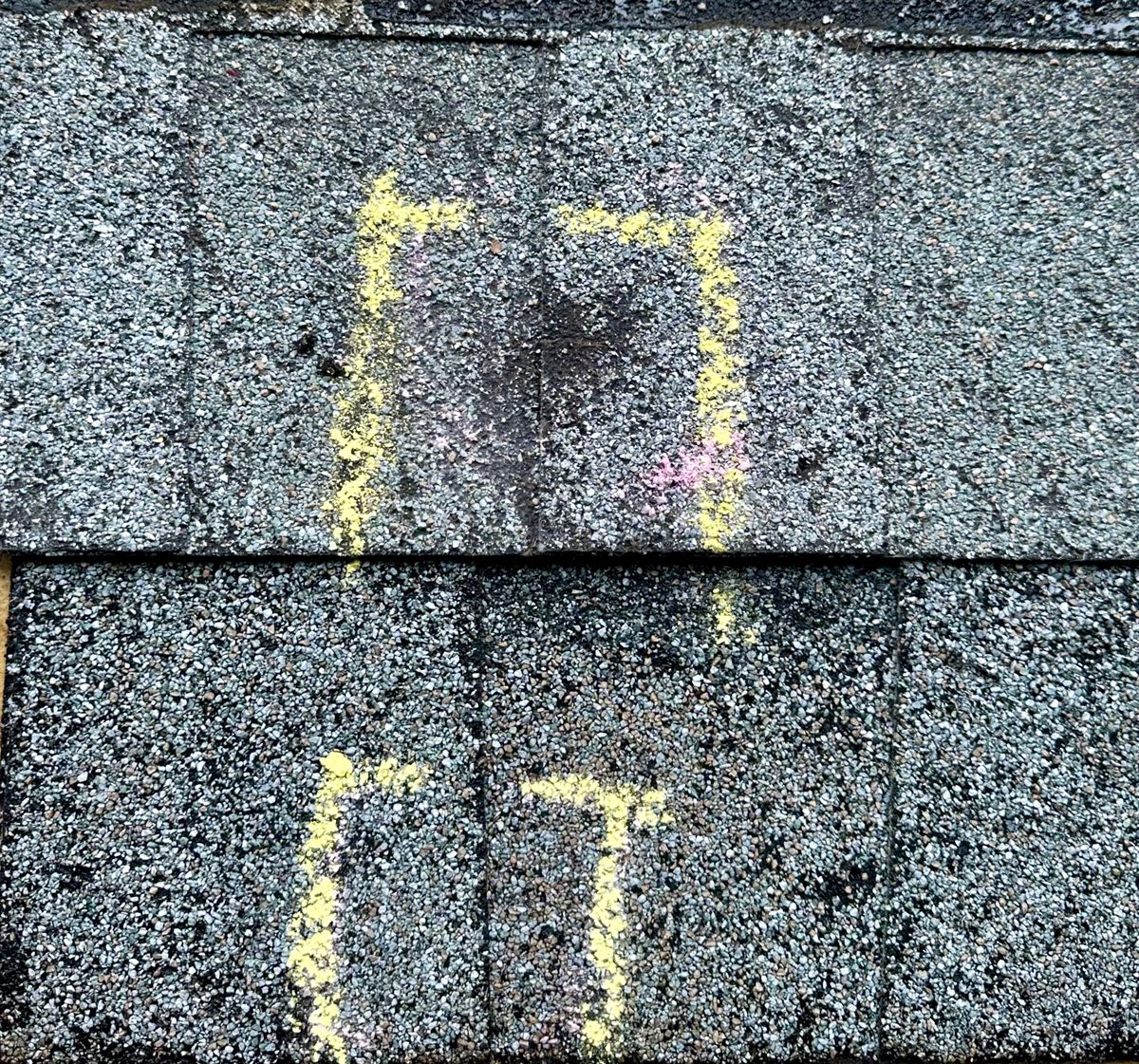
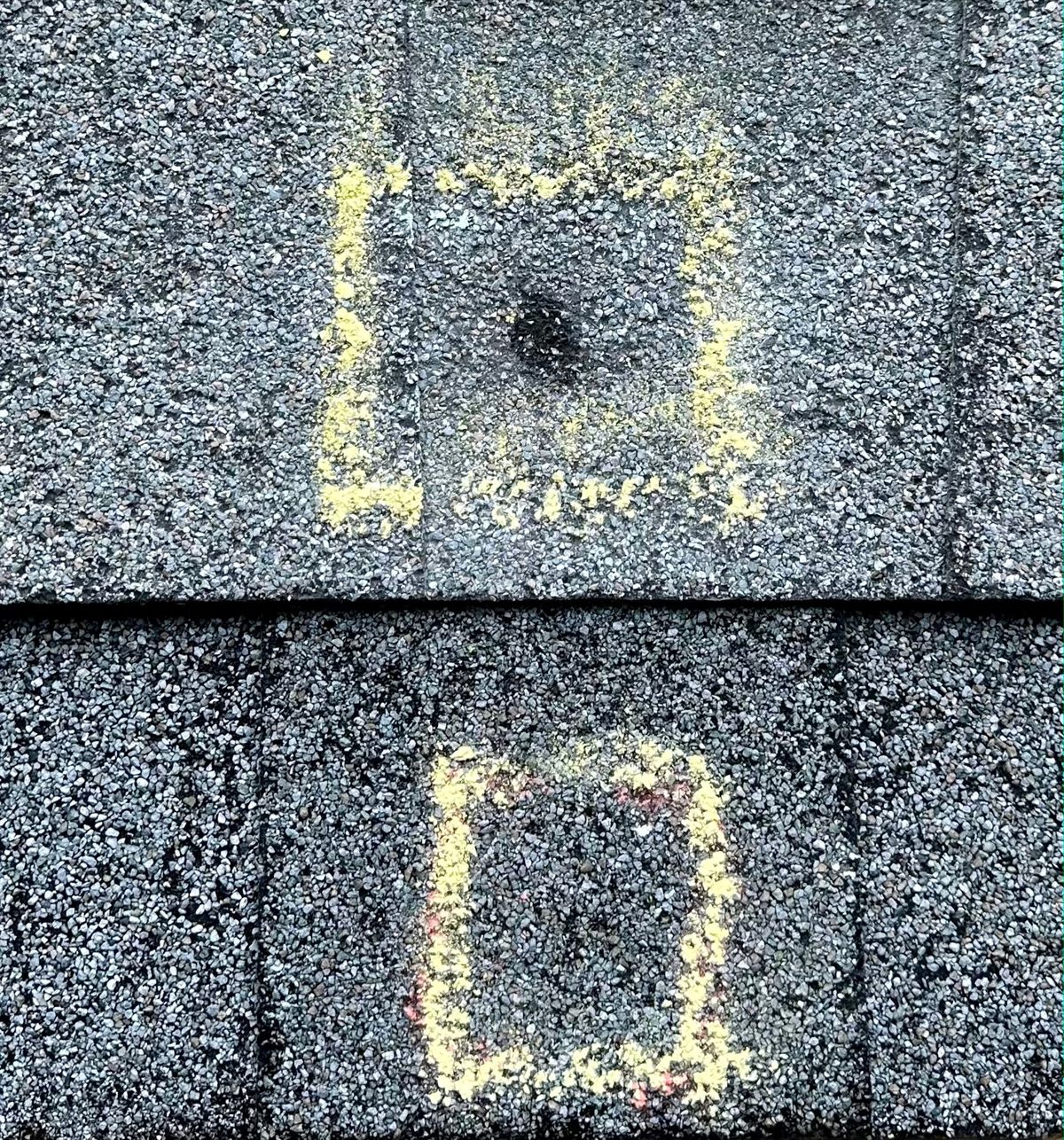
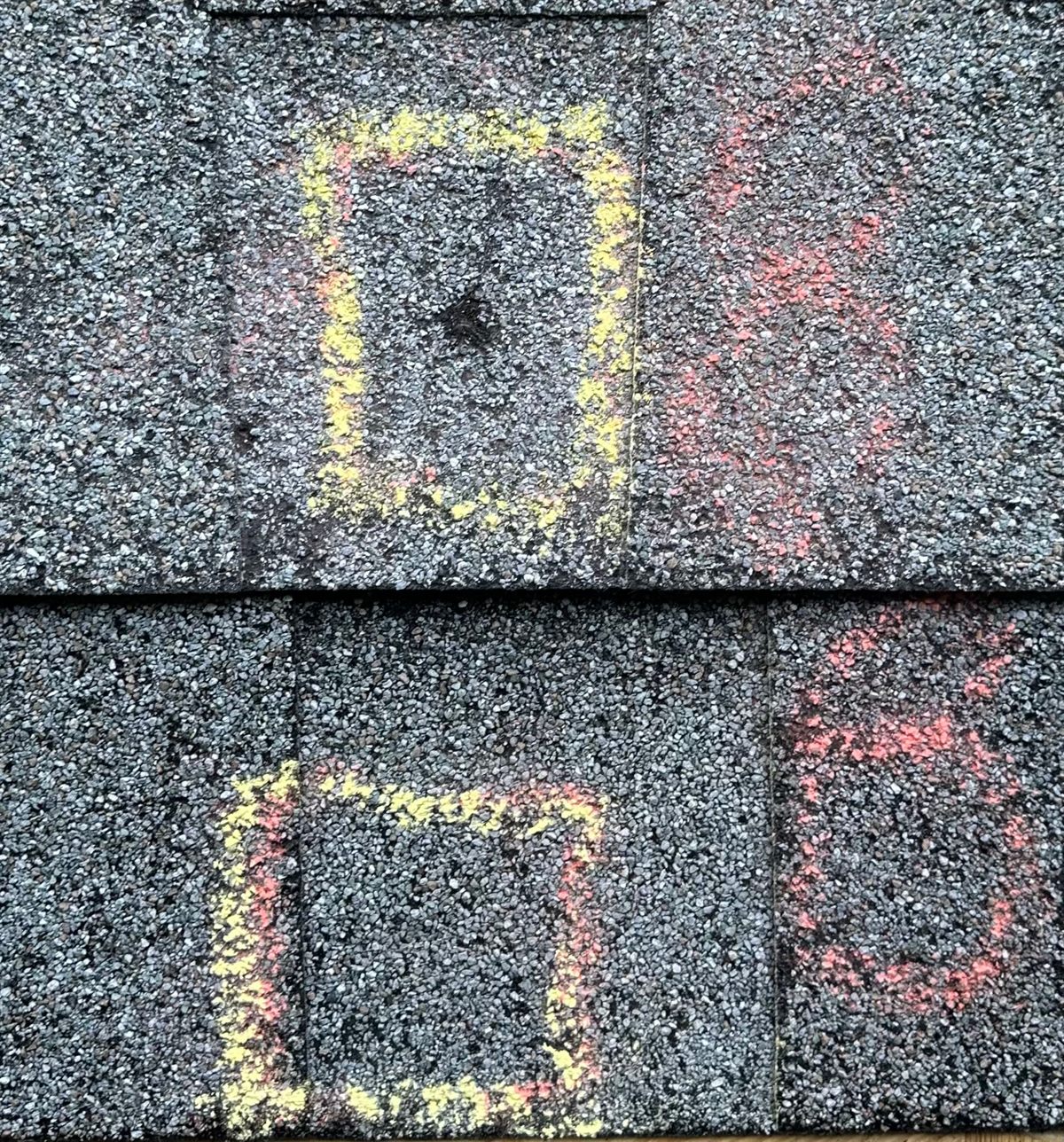
These photos are from our own hail-cannon field test — we fire simulated hail at real shingles, so we know exactly what impact damage looks like before we chalk it on your roof. Cracks, punctures, granule loss driven to the mat: the same patterns adjusters look for. The full test is on the GoNano page.
The honest framing
Not every storm justifies a claim. If we find three bruised shingles, the right move is a small repair, not a claim against your policy. We tell you what we'd do on our own house, show you the photos, and let you decide. About a third of our storm inspections end with "your roof is fine."
How does the claim process actually work?
Five steps, and we're beside you for all of them:
- Free inspection first. Before you call your insurer, know what you have. We document every soft spot, dent, and displaced shingle with time-stamped photos.
- You file the claim. If the damage justifies it, you call your carrier or file online. It takes about 15 minutes; we'll tell you exactly what to say and what not to speculate about.
- We meet your adjuster on the roof. This is the step that changes outcomes. An adjuster walking the roof alone misses things; an adjuster walking it with a contractor who has photos of every hit doesn't.
- Scope review. We check the insurance scope line by line against the real damage — decking, flashing, ventilation, code-required upgrades — and submit supplements when items are missed.
- Build it back better. Once approved, we replace the roof to current code. Ask about Class 4 impact-rated shingles — many Colorado insurers discount premiums for them, so the storm that took your roof can leave you with a stronger one and a lower bill.
What does it cost you?
Your deductible. That's the number. We work from the insurance scope, we don't charge you to meet the adjuster or review paperwork, and you don't pay us anything until your claim is approved.
If your claim is denied and we believe the denial is wrong, we'll stand behind a re-inspection with your adjuster, help assemble supplemental documentation, and walk you through the appraisal clause if it comes to that. See the FAQ below — denials are often reversible.
Why the Front Range is hail country.
The numbers behind Colorado's storm seasons — and why roof decisions here are insurance decisions.
Claims, deductibles & denials.
Storm just came through? Call 303.993.3739 for a free inspection before you file anything.
Will filing a claim raise my rates?
Hail is an "act of God" — insurers can't surcharge you individually for a single weather claim the way they can for at-fault claims. After big storms, rates rise across the whole zip code whether you filed or not. Skipping a legitimate claim usually means paying the higher premium anyway, with a damaged roof.
How long do I have to file?
Generally one year from the storm date under most Colorado policies — some allow less. If a storm came through this season and you haven't had the roof looked at, get the free inspection now; the clock is running whether the damage is visible or not.
What if my claim is denied?
Denials are often reversible. Request a re-inspection with us present, submit supplemental photo documentation, or invoke your policy's appraisal clause. Many "no damage" verdicts change when someone who knows roofs is standing next to the adjuster.
Can a contractor pay my deductible?
No — in Colorado that's illegal under SB 12-038. Any roofer offering to waive or absorb your deductible is breaking state law. It's also the classic mark of a storm-chaser who won't be here when the warranty matters.
Should I upgrade to Class 4 shingles on the claim?
Usually worth it. Insurance pays for like-for-like replacement; the Class 4 upgrade is a modest out-of-pocket add, and many Colorado insurers discount premiums for impact-rated roofs. Details on the replacement page.
Can hail damage derail a home sale?
It can — and it's fixable fast. A recent sale in Saddle Rock (Aurora) nearly fell apart until the parties called us to inspect. We found hail damage, the seller filed a claim, we met the adjuster and replaced the roof — and the deal closed with a brand-new roof on the house. Buyer happy, seller happy. If you're buying or selling, a free pre-listing or pre-closing inspection removes the biggest surprise in the deal. Call 303.993.3739.
Storm season doesn't wait. Neither should you.
Free inspection, honest verdict, full documentation. If a claim is justified, we're with you from first photo to final shingle.